Wednesday, June 5, 2013

A Wonderful Life

If someone shared the Gospel with you in the last 30 years it may have been summed up in the phrase, “God loves you and has a wonderful plan for your life.”

I think there is a problem with this statement.

The problem is not that it is not true.  God does love you.  He does have a plan and intention for your life.  It is wonderful.

The problem is in how we hear the word wonderful. Most of us, if we are honest with ourselves, want to believe that “wonderful” means that we will never experience hardship.  We will never know what it means to be attacked or maligned, our health will be good, our finances will be stable, and our relationships will not be strained. We also want to believe that it means that we will be attractive to others.  We will be safe and secure.  Death, for anyone we love including ourselves, will only come after a long life.  We will have abundance, and we will succeed at everything we do.

I wonder how this view of wonderful would have squared with Joseph, who found himself in the bottom of a well, sold into slavery at the hands of his brothers, and eventually rotting in Pharaoh‘s jail.


I wonder if this definition would have rung true with Ruth, who watched all the men of her family die, followed her mother-in-law into a foreign land, leaving her biological family behind, and found herself, with the rest of the poor and destitute, gleaning at the edge of a field.


I wonder how wonderful it felt for David as he sat in the back of a cold, dark, damp cave, hiding from the king he had faithfully served and now was trying to kill him.  I wonder if living in the land of his enemies was part of his vision of a wonderful plan, or if he ever dreamed God’s intention would put him in a position of acting like a mad man to save his life.


I wonder if Daniel was thinking how wonderful life was as he watched his country be overrun by a foreign power, and was hauled off to strange capital, given a new name and indoctrinated into another culture.  Was “wonderful’ what he was thinking when the door was shut behind him and standing in front of him was a bunch of hungry lions?


I wonder if the disciples, when they chose to follow Jesus had  imagined that they would be accused of being drunk, rejected, and scorned.  In their definition of wonderful, did they include beating, flogging, stoning, imprisonment, beheading, and crucifixion? 


I do not think they did, but if we could sit down and talk to the disciples, or any one of these heroes of the faith, I think they would tell you that God’s plan was indeed wonderful, and not because their suffering often led to significant moments in the unveiling of God’s big story.

I think they would tell you it was wonderful because of what they learned as they found themselves in these situations where they had to surrender their will, desires, security, reputation, and future.  They discovered that God grace is sufficient and He is able to sustain, even in the hardest circumstance.  

 As they allowed their dreams to die and embraced His will, they discovered how narrow their vision was and how vast the wisdom of God.  They found that God was more concerned about the refining of their heart and the conforming of their character, than He was about their circumstances.  They discovered that circumstances do not define who they are or even determine their ability to experience peace and joy.  Their hearts became like God’s hearts, and eventually they were able to see what God was doing through it all, if not in this life, in the next.

This was truly wonderful, for through their stories God was writing a story of love, redemption and reconciliation.

What was required for these people to enter into this wonderful plan?  They had to abandon any hope that they had placed in their circumstances and choose to trust God knows what He is doing, even when their situation seemed unfair, unloving, and even harsh. 

They had to decide that it was more important to abandon their lives to the will of God, than it was to try to manipulate and control their situation in order to keep from experiencing pain.

In the loneliness of the well, field, cave, den, or prison they had to believe with their entire being that they were not alone, and had not been forgotten.

What enabled them to do these things?  It was not their circumstance, and it was not the strength of their own character.  What allowed them to develop the capacity to trust God for their future, even when it seemed they would not have one, was their experiential knowledge of the One in whom they would place their trust. 

These people had experienced God as He spoke to them in their dreams. They had seen Him in the people with whom they lived. They experienced His protection while tending sheep.  They saw God keep them safe, even when their country was overthrown. They saw him heal the afflicted, command the wind and the waves, and discern the hearts of men.  They witnessed death and then resurrection. 

In short, they experience, remembered, and then trusted in the character and nature of God, even when they could not discern what He was doing. 

It was not about their circumstances.  It was not about who they were.  It was all about who He is. This realization, and the circumstances that brings you to it, is a powerful place to find yourself.

I know people who are living in this place right now.  I know a woman who is fighting a very aggressive form of cancer that has disfigured her face.  I know a family who has to make very hard decisions regarding treatment for their daughter who has a disease that has yet to be fully diagnosed.  I know men who do not have jobs that allow them to provide for their families. I know parents whose children struggle with drugs.  I know spouses who have watched their partner walk away.  I know families who struggle to make their rent, and I know people who have had their reputation drug through the mud.

None of these circumstances are what I would call wonderful, but that does not mean that they will not be redeemed and become part of God’s grand story of love, redemption and restoration. It does not mean that they will not lead to something wonderful.

In order for that to happen, however, a simple but very hard move will have to be made.  All of these people will have to abandon their hope in their circumstance, remember their experience of God in the past, yield themselves to God’s will present, and trust that He knows what He is doing, even if they cannot see or understand it. 

It is in this place that one discovers what “wonderful” really means.  The wonderfulness of a life that is not blown about by circumstances, but is rooted and grounded in the reality of a God who loves us enough to pry our heart away from being dependent on our circumstances for our well-being, in order to allow us to learn what it is to find our life in Him. Rich, full, abundant life, even when it seems we have nothing.

It is then that people will say about us, “There is a man or women after God’s own heart.”  We will be able to say, “In Him will I trust,” and like the apostle Paul we will be able to declare with confidence, “I know what it is to be in need, and I know what it is to have plenty. I have learned the secret of being content in any and every situation, whether well fed or hungry, whether living in plenty or in want. I can do all this through him who gives me strength.”

To be able to say this, and have the reality of it inform our entire life, truly is wonderful.

And we know that in all things God works for the good of those who love him, who have been called according to his purpose. – Romans 8:28

Consider it pure joy, my brothers and sisters, whenever you face trials of many kinds, because you know that the testing of your faith produces perseverance. Let perseverance finish its work so that you may be mature and complete, not lacking anything. – James 1:2-4

The Lord is my strength and my shield; my heart trusts in him, and he helps me. My heart leaps for joy, and with my song I praise him. – Psalm 28:7

Monday, June 3, 2013

Burns Flat or Bust!

Every Friday morning I have breakfast with one of my best friends Dana.  We have our routine down. We go to the same restaurant. We sit at the same table, on the same sides, except of course when someone who doesn’t know the drill beats us to the booth.  The waitress knows what we will drink and she knows exactly what I will order. Just so we are not completely predictable, Dana keeps her guessing by ordering something different nearly every week, but even then, if you were to track what he orders you would find only four or five variations on his breakfast.  Often the waitress can guess what he will order that morning.  We are creatures of habit.

About a year-and-half ago we broke our routine when I brought someone with me, my father.  I knew that my dad, and by default, our family had been stationed at Clinton-Sherman Air Force Base in Oklahoma (AKA Burns Flat).  I also knew that Dana had grown up in Corn, Oklahoma and that the two places were quite close.  Little did I know how close.

As Dana and my father began to talk, I was amaze at how many places they shared in common.  Dana’s dad and mine spent time in the same bar and pool hall.  On Thursday evenings, the bar had a special on calf fries that drew nearly everyone from the surrounding communities.  Our fathers shopped in the same grocery stores, went to the same auto parts stores, and drove the same roads.  My Father worked at a cotton gin part-time to make a few extra bucks.  Dana knew right where it was.  For over an hour I sat there and listened to them talk about all things they shared in common.  When I brought my father to breakfast that morning, I had not expected there to be so much of a connection.

I first heard Dana’s name when I was working with his wife-to-be at a summer day camp.  She was planning their wedding that would take place the next January and could not stop talking about her man.  Dana was working in central California; I had never met him so he was nothing more than a name to me. 

Once they were married, they started attending the young married class at the church where my wife and I attended.  Finally, I could put a face to the name.  We ended up in a small group where we shared the teaching load with a couple of other men.  One thing lead to another and some of those men started going on retreat together twice a year.  We now have been doing this for 25 years.  They are my band of brothers.  Most of them have moved away. 

Dana and I are the only two left in the area.  We have served in ministry together, gone on missions trips together, and started ministries together.  About ten years ago, we started having breakfast once at week to encourage one another and to spur one another on towards love and good deeds.  All of these experiences and time spent have caused Dana to become much more than a friend, he is my brother.

I sat there, listening to my father and brother talk, with great enthusiasm, about the places they both knew so well.  As is listened, it dawned on me that long before I knew Debbie and she talked about Dana, long before we shared teaching duties, went on adventures, and shared life, hearts and passion for God Dana and I could have played on the same playground.  We could have bumped into each other in the isle of a store, or we could have sat there in the bar watching our fathers have a beer and play pool. 

I could not help but think if we could rewind our lives, like in the movie the Sixth Sense, we would be able to look back and discover how our lives were knit together long before we ever imagined. It seemed to me God had written our stories together from the very beginning.

It then it dawned on me, we needed to go back to these places together.  When I mentioned it to Dana, his eyes lit up.  Therefore, in two weeks, we will embark on a journey back to Burns Flat/Corn, Oklahoma.

This is a very significant trip for me.  There are memories of that place that I need to put into perspective.  Currently they are contained in the experience of a three-year-old boy.  I want to bring them into the experience and memory of a grown man. There is also the opportunity to put places, smells and faces to the many stories Dana has shared with me about his childhood. In some ways, it will help to bring a greater sense of reality to the life stories he has told me.  It is kind of like seeing the movie after reading the book.

I imagine we will find ourselves at The Bessie-Y (if it still exists) and play a game of pool.  We will go to the restaurant where Dana started working at the age of nine.   


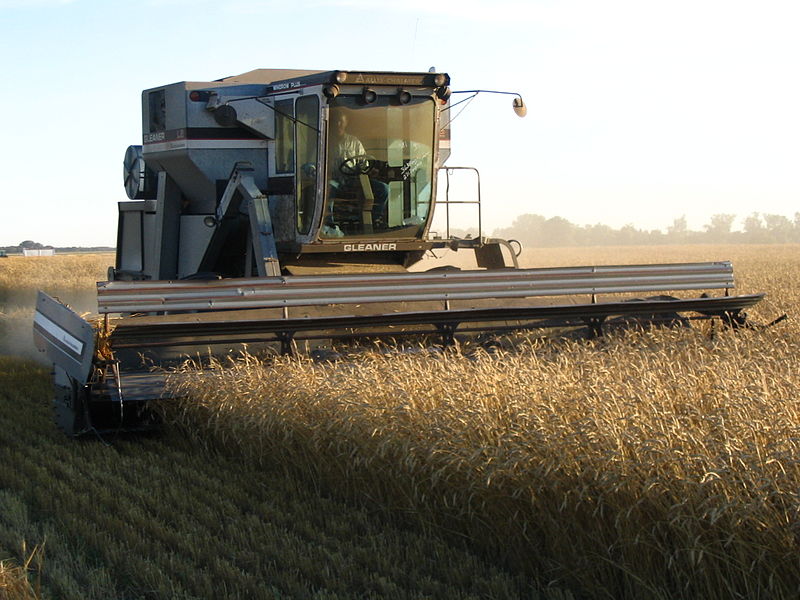
We will drive a wheat combine during harvest on the farm Dana worked at in high school.   


We will visit the flight line where my dog would chase B-52’s until the base commander called my parents and asked them to come and get the dog.  


We will look into the storm drain where my father lowered me into the darkness to retrieve the toy gun I had dropped into it, and I will stand in front of the house where I built snowmen and take a photo (though in June there will be no snow).  We will go to the house where Dana’s mom lives, and I will meet his mother.


Who knows how many adventures and memories we will recall, and make?  Who know what this trip will heal, or how it will further knit our lives together, creating an even more significant bond than we already share? 

It is worth the journey to find out.  I will be sure to share with you what we discover.

Sunday, June 2, 2013

@#$%^&*!

The English alphabet, which is actually the Latin alphabet, has 26 letters. By themselves the letters really do not have much meaning. Well, that is of course if you do not count the one letter words of A and I, or you discount the letters that sound like words like B, C, J, O, P, Q, R, T, U and Y.  However, if you combine a few of these 26 letters, in one of what seems like an endless combination of letters, you can form a word that carries with it a tremendous amount of meaning.  This is great power.


The power that these conglomerations of letter possess is the power to teach, inform, define, persuade, encourage, and impart life.  Groupings like these are wonderful words.  Unfortunately, these letters can also be formed into words that confuse, label, divide, hurt, attack and destroy.  These are nasty words.

Of all the nasty words I know, and I have heard a few in my day, I think two of the nastiest are, they and them.  These four letter words are expressions of exclusion.  They imply that in contrast to they and them there is a we and an us.  

Now we and us can be a very powerful expression of inclusion.  They can communicate you belong.  You are part of us.  You are of our people.  When, however, they are used in combination with the words they and them suddenly they become words that separate.  The implication is that somehow, they are different, they do not belong, they are not one of us. 

I cannot think of anything nastier to communicate to someone than this.  In fact, if you think about it, nearly all other nasty words you know in varying degrees and intensities communicate this very same message.  Sure, some other nasty words seem to be talking about the color of someone’s skin, their economic status, the quality of the family they come from, or they attack the character and identity of the person at whom they are aimed, but in reality, they really are simply saying you are not like me.  You are less valuable.  You do not fit. 

This is nasty stuff.

Surely, you have known people that talk about others like this.  The kind of People who are always using we and us with they and them, even if they are using very different words.  Sometimes I get very angry with people who use such terms, but mostly I just feel sad for these people.  The place in their heart where such words are formed is a place that is filled with doubt and fear that they do not belong, matter, or have value.  The use of such words on others is really a cover for their own insecurity.  If we were honest with ourselves, to one degree or another, is the same insecurity true about nearly every one of our hearts.

The only people I have seen who have escaped this reality are the ones who have risked being open about their fear and doubt of not belonging.  In the process they have also opened themselves up to the possibility of receiving love and acceptance from others.  When this happens it is powerful and life-changing.

Since all of us, at some level, have the same fear and doubt rooted in our hearts, and all of us are tempted to form words that carve out a place of belonging by keeping others out I wonder what would happen if we resisted the temptation.  What if we threw away the words they and them, and spoke to everyone with we and us?  How could even one person, making such a choice, affect the people that they come in contact with on a daily basis?

Imagine how surprised people would be, who are ready to receive rejection, when they are offered love, acceptance and inclusion.  How might this change their perspective, but more importantly their hearts?  How would it affect how they related and responded to others?  Might it cause them to be willing to remove such words as they and them from their vocabulary and replace them with we and us.

What affect would this then have on the people that they touch?

I think it would be a game changer, It is the kind of move that would make all the difference in the world.   Imagine what it would be to hear; you, who fear being rejected, are accepted.  You, who are not included, will be grafted into the community.  You, who feel like foreigners and aliens, can become citizens.  You, who see yourselves as enemies, can now become friends. You, who question whether you are esteemed, can discover how deeply and completely you are loved.

Could there be any more powerful message for all of us who have deep within our hearts the fear that we do not belong and are not loved.  Could there be any greater reality we could have the privilege of communicating to another, than the truth that these fear are totally and completely unfounded. 

It seems to me, the power of this message makes removing the words they and them from our vocabulary a no brainier. 

My Teacher - Part 2

Over the past several weeks, I have been visited each morning by a hummingbird.  In watching it dart from the fountain, to the lemon tree, to the flowers it has been teaching me (I wrote about this in a previous Note).  I have enjoyed watching it flitter around the yard so much I made a decision to go out and buy a hummingbird feeder.

With some help from a self-proclaimed hummingbird feeder expert, I picked out just the right one.  After bringing it home, I did some research online to find out how to make the best mixture with which to fill my feeder.  I then pick an appropriate spot to hang it.  Once the hook was in place, the chain cut to the right length, and the mixture cooled in the refrigerator, I set out my gift to my friend.  Like a host who sets out Ice Tea and watermelon on a hot summer day for the friend who has come to visit, I hung this feeder to let my new friend know how much I appreciated his presence.

Over the next several mornings, I sat in my Jacuzzi learning to float (see previous note), and watched the little bird flitter into the yard.  No longer did he dart from the fountain, lemon tree and flowers.  Now, he went directly to the feeder.  After taking a long drink, he flew out of the yard.

At first, I was pleased.  I had brought a gift and he had accepted it.  I was able to be gracious to my little friend.  As the days passed, however, my pleasure began to turn to sadness.

I had thought that the newness of the feeder would wear off and the hummingbird would once again return to darting about the yard.  It has not happened.  The bird now simply flies into the yard, feeds and then flitters away.  My back yard, which once was a place of exploration for the bird, has become restricted to a singularly focused feeding spot.

Yes, the hummingbird is able to find food at any time, but what has he lost?

I started to think about how God provides for the bird.  He does not set all the nectar in one place, but disperses it in blooms, blossoms and flowers across a landscape.  This causes the hummingbird to venture out and explore.  It causes him to fulfill his vocation of pollinating flowers, allowing the plants thrive.  These are often some of the most beautiful flowers in the garden, and so in some way his vocation is to be part of spreading beauty.  It also causes him to be active and while I am no biologist, I have to imagine that this makes the bird strong and healthy.  Then there is the reality that in God’s perfect design of the hummingbirds feeding system, the bird is dependent upon his heavenly Father that feeds him.  He learns to trust the one who created him.

Watching him come into the yard, go directly to the feeder, and then dart out of the yard again, I could not help but think about how I had circumvented all of this.  The bird was becoming dependent on my feeder and not on the Father.  In the process of creating this dependence, I had invited him to lay aside his freedom, vocation, and dependence on the Father.  This stirred sadness in me.

As I thought about it more, I wondered how often we do the same thing with people.  We, because we see a need or we need to be needed, willingly allow others to become dependent upon us instead of helping them to explore what God is doing, fulfill their vocation, and learn to trust their heavenly Father who willingly feeds the birds.  How much more valuable are they to Him?  Will he not care for them?  Why do we seek to take God’s place?

I mentioned all of this to a friend who is the closest thing to a bird expert that I know.  She acknowledged that the feeder does seem to have the effect of making the birds dependent and it does seem to rob the hummingbird of some of what it was created to be and do.  She told me that though she has a feeder, she does not always keep it full.  She keeps the bird guessing and forces it at times to go back out and find what it needs in the ecosystem God created.  This seemed to me a half step toward the good.

After researching it a bit more online I have found that there are certain flowers you can plant that will provide what the hummingbirds needs without causing the kind of dependence that robs him of his vocation and purpose.  It seems to me in this way, you are not become the one upon which the bird depends, but rather you are joining God in His work of providing not only for the bird, but also for the flowers.  This seems to me to be the essence of real hospitality, so I plan to plant some new flowers in my back yard.

images

I wonder how we can demonstrate this kind of hospitality to one another.  How can we refrain from creating dependence that takes the place of the system God has put into place, which allows for the fulfillment of our vocation and purpose.  How can we encourage another’s growth in trust and dependence upon Him?  How can we join God in what He is doing, rather than trying to provide our feeder upon which people can become dependent?

I imagine each situation and each relationship will be different, just like there are different flowers you would plant for hummingbirds verses what you would plant for bees. What we must become are people who do more than simply recognize the needs around us.  We must also be able to recognize our own hearts motivation, but most importantly, we must be able to discern the ecosystem the Father has set in place to meet the needs of his children, to help them become strong and healthy, to enable them to fulfill their vocation, and to teach them that He is trustworthy and dependable.

Once we have figured out what this garden looks like, we can then turn our attention to fulfilling our vocation of joining the Father in what he is doing, helping to cultivate an environment that helps other to thrive.  I believe joining God in creating such a place much joy will be found.  The kind of joy you get when you see a hummingbird flitter and dart around the backyard in freedom.

My Teacher

My morning routine has changed recently.  Now, immediately after I wake up I roll out of bed, dawn my swim trunks and head off to the Jacuzzi.  This is not simply a way to wake up slowly; it is an opportunity to begin my day with stillness.

In all actuality, I head off to the Jacuzzi to learn and practice how to float.  I do not mean literally floating, though I have tried it.  I am talking about teaching my heart to float, learning to allow the current of God leading to direct my day and not my own effort.  I spend the time soaking in the warm water praying and yielding my heart to God.  I am practicing what it is to trust Him, to rest in Him and float.  This is not as easy as it sounds to learn and practice, but recently I have had a new teacher.

The last few mornings a hummingbird has come into the yard right after I begin this daily ritual.  In fact, his appearance has become something of a ritual itself.  Sitting there watching that bird, especially with my glasses off, it seems as though he is simply standing still, in mid air with no effort at all, but this is not the case.  A hummingbird, as it floats there, is actually a flurry of activity.  Depending on the size of the bird, it can beat its wings anywhere from 12 to 100 times per second.  Their heart rate can reach as high as 1,260 beats per minute.

Purple-throated_carib_hummingbird_feeding

To watch the bird flit around the yard you would think it never stops, but this is not the case.  Hummingbirds are capable of slowing down their metabolism at night, or any other time food is not readily available.  They can dramatically reduce their breathing and hearts rates during these times of needed rest.  They can go from 1,260 beats per minute to 50 to 180.  In short, a hummingbird knows how to rest.

The result of this ability to rest is that they live quite long lives when compared to other organisms with such rapid metabolisms, and birds of similar sizes.  Among other North American birds, the normal life span is 3 to 5 years.  The humming bird can live up to a decade.  Their life is twice as long, because of their ability to rest when it is appropriate to do so.

This pattern of rest and activity is something I must continue to learn if I hope to mirror the longevity and effectiveness of my new friend.  His example has given me great encouragement that my time in the Jacuzzi is well spent, learning to float, calming my heart in prayer, and learning rest.  From this place of rest, I will develop the capacity to live out the life God has entrusted to me and the trust to allow myself to be guided by His will.

So tomorrow, you will find me rolling out of bed and practicing how to float.

“Come to me, all you who are weary and burdened, and I will give you rest. Take my yoke upon you and learn from me, for I am gentle and humble in heart, and you will find rest for your souls. For my yoke is easy and my burden is light.” – Matthew 11:28-30


The Tale of Two Services

Last week, in between Sundays, I attended two worship services.  My soul needed it after the first Sunday in 28 years without a church to call home was a bust in regards to worship.  We were late to one local service and before we could get across town to the next we received a text letting us know that we needed to meet up with our daughter who was learning to navigate her own new normal  Fifteen minutes later we received another text letting us know the crisis was averted and she would see us after church.  This pause was just long enough to make us late for our second service in one day.  Not wanting to make it a third, we ended up staying home and listening to a sermon on line.  It was excellent, but the experience left our hearts hungering to worship with others in community.

We found a midweek service to attend.  It was one of the best produced I had ever been to in the local area.  In fact, only at conferences have I experienced such excellent video, lighting, camera work, and music.  For someone who loves creating environments for worship you would have thought I would have been in Heaven, but that was not the case.

In this service, they kept talking about being happy, “Happy in the Lord.”  To be honest I was anything but happy.  In fact, I was the opposite of happy.  I was experiencing sadness, loss, and grief.  My soul could not take it.  I leaned over to my wife and asked, “Are you ready to get out of here.”  To my surprise, she was hoping I would ask. As inconspicuously as possible, we got up and walked out.

The second service I attended was a funeral.  A house filled with sadness, loss and grief.  I felt at home.  There was no talk of being happy.  They did speak about happy times, but these were moments of a larger life, filled with both happiness and sadness.  To hear them talk about it, these two emotional states would ebb and flow, even intermingle through the seasons of life.  I knew this was true.

They did not leave it there however. They talked, sung, and prayed about something deeper than happiness, and far deeper than sadness.   They spoke about joy and in the process drew our hearts into it. This worship was what we had longed to engage in.  It was healing.

You see, Joy moves us beyond our emotions to the deep places of our hearts.  It springs up, not from our circumstances, but from gratitude. It is given birth in remembering God’s faithfulness in the past and trusting Him to be faithful in the future. Joy is a calm delight that rises from our knowledge of who God is. His character, nature and love.  It flows from the knowledge that we are His and He cares for us, even when the circumstances of our life are hard.

I am sad.  There has been loss.  I will continue to grieve, but in the midst of it, I can tell you with great confidence there is joy.  I was grateful to find a worship service that was able to speak to all of it.

Yet I will rejoice in the Lord,
   I will be joyful in God my Savior.

The Sovereign Lord is my strength;
   he makes my feet like the feet of a deer,
   he enables me to tread on the heights.

Habakkuk 3:18-19

Master

Today I had the privilege of going to the funeral for John “Big Daddy” Harris, the father of a good friend.  It was held at a church in South Central L.A.  While the funeral took 2 hours, it passed by so quickly you hardly noticed and in the process, it moved my heart deeply.  I was especially impacted by Reverend Prentiss Lewis’ rendition of “I won’t Complain.”  I cried like a baby.

At another point in the service, an old minister named Reverend Clifford Johnson walked up to the microphone to pray.  While he began his prayer calling out to Jesus, in the middle of it he started to refer to Christ as Master.  Now we who follow Jesus know that he is Lord and Master, but it meant something far deeper coming from this man.

Earlier in the service, Rev. Lewis talked about how good God had been to answer prayer and rescue their people from slavery.  The African-Americans in that room have a collective memory in their community that I do not share.  They can recollect what it is as a people to be enslaved and oppressed.  They remember what it was like to live in a society where they were seen as property.  They remember what it is to come under the heavy hand of a master.

Along with this memory is the remembrance they were freed by the grace of God.  You would think that this freedom would embolden this community to never again utter the word master, and yet, over and over again this pastor called out to God as Master.  Each time he spoke the word it seemed to become more personal and affectionate.  With each utterance, the power of how he spoke the word penetrated my heart at a deeper level.

Here was a man, who shared a collective memory of what it was to be subject to a master against his will, and he was willingly and affectionately, subjecting himself to God.  Having been freed, he now yielded his freedom in order to glorify the one who loved him enough to set him free.
This was deeply moving to me.

I have thought of Jesus as my Savior, my Lord, my friend, my help in time of trouble, but I honestly do not know if I have ever thought of him as my Master, at least not in the way I did while I was listening to that man pray.

While I do not share the same collective memory of slavery as this brother in Christ, Jesus has freed me from a great many things in my life.  Maybe the reason I have not thought of Christ in the same way as this Rev. Johnson is I do not recollect just how enslaved I was.  Maybe if I did, I would also, willingly and affectionately, yield my freedom in order to glorify the one who loved me enough to set me free.  When I prayed, maybe I too would call out to my Master.

Going to this funeral was a great gift to me. It expanded my vision of what it means to give myself to Christ, my Master.